Type HydroGEN0
We are developing a modular, highly efficient PEM electrolyzer that enables scalability from 200 kW up to a 1 MW system.
Thanks to its intelligent architecture and advanced materials, we achieve higher efficiency, lower costs and, above all, longer service life.
The first prototypes were created as a step towards supporting decentralized hydrogen production with direct connection to renewable energy sources.
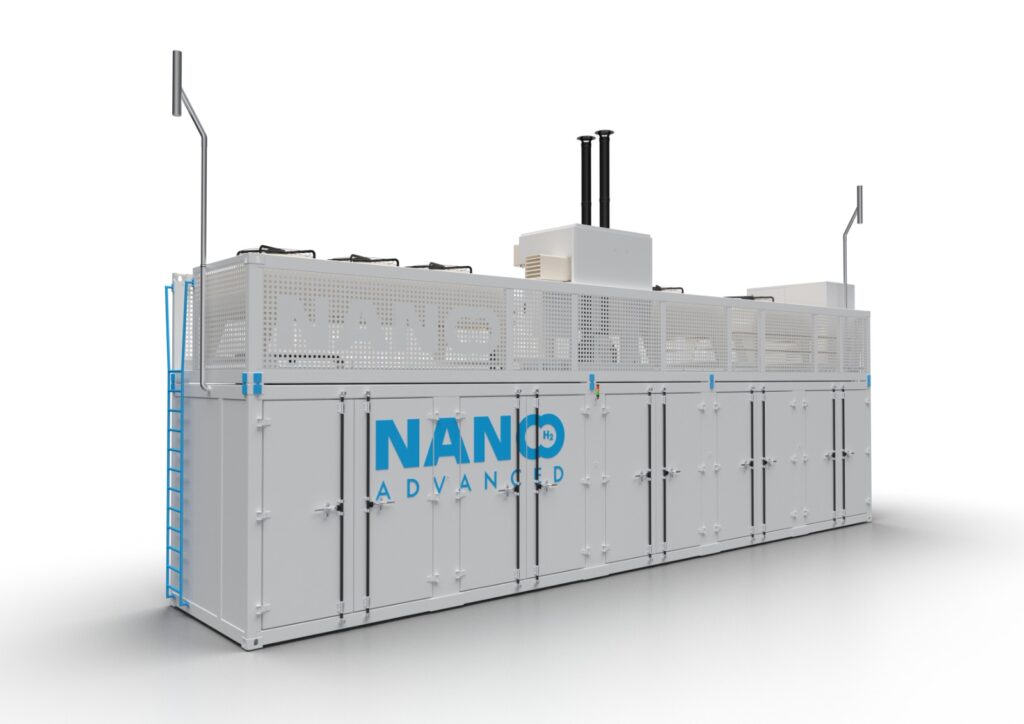
The electrolyzer is designed to operate smoothly, especially under variable electricity supply from solar panels, wind turbines or other green energy sources. This flexibility is essential for decentralized deployment in the context of the hydrogen and circular economy. PEM technology generally offers greater flexibility and faster response to load changes than traditional alkaline electrolyzers, which are better suited to stable operating parameters and continuous power supply. However, this flexibility is achieved through the use of platinum and iridium in the catalysts, which also results in a higher initial investment.
Reducing their otherwise significant operational wear is a clear economic necessity — and this is precisely what our solution focuses on.
We build on advanced principles of controlling the electrolytic decomposition of water, where conventional PEM systems typically achieve efficiency levels of 70–82%.
Our solution targets the upper end of this range through optimization of operating conditions, advanced catalysts and system integration.
The system is built from modular blocks that can be easily combined, scaled and adapted to a specific installation. This flexibility enables use in both smaller operations and large industrial sites.
The system is equipped with intelligent control software that monitors performance, operating data and material condition, while optimizing the operation of the equipment in real time — for example, under variable input from renewable energy sources. This enables higher stability and safety while minimizing operating costs. To fully utilize the potential of artificial intelligence, it was necessary to develop a range of proprietary components, as the available technologies were not suitable for this purpose.

This project is co-financed with state support from the Technology Agency of the Czech Republic under the THÉTA 2 programme.